



Features describe what a product is or does. Benefits explain what the customer gains from it. That single distinction separates copy that informs from copy that sells. A feature is objective and factual: a specification, a capability, a component. A benefit is the outcome the customer actually cares about — the problem solved, the time saved, the stress removed.
Here is the clearest way to hold the two apart:
-
Feature: “This laptop has a 12-hour battery life.”
-
Benefit: “You can work through a full day without hunting for a power socket.”
-
Feature: “Our software includes bulk-publish capability.”
-
Benefit: “You save hours of manual work and stop worrying about inconsistent listings.”
Features answer “what is it?” Benefits answer “why does it matter to me?” Customers rarely buy specifications. They buy the version of their life that the product makes possible. The moment your messaging shifts from describing the product to describing the customer’s improved situation, it starts doing real persuasive work.
Why benefits-focused messaging drives better sales outcomes
Benefits resonate more than features in purchase decisions because they tap into emotional drivers: saving time, reducing stress, gaining confidence. A list of technical capabilities tells the customer what they are buying. A benefit statement tells them what changes for them after they buy it.

Feature-only messaging creates a specific problem: it forces the customer to do the mental work of connecting specifications to their own life. Most will not bother. They will move on, or they will treat your product as a commodity and compare purely on price. Benefits-driven messaging shifts the conversation from price competition to value delivery, which is exactly how brands justify premium positioning.
That said, features are not useless. Technical buyers expect detailed specifications as proof that a product can do what it claims. A developer evaluating an API wants to know the supported languages and security protocols. A procurement manager signing off on enterprise software wants to see the feature list. The mistake is leading with features for an audience that has not yet decided they need the product at all.
Pro Tip: Match your messaging layer to your audience. For general consumers or early-stage prospects, open with the benefit and use features as supporting evidence. For technical buyers who are already evaluating options, put features prominently but still frame them with a benefit headline so they understand the outcome, not just the capability.
How advantages connect features to benefits
Between a feature and a benefit sits a third element that most messaging skips entirely: the advantage. Understanding all three is what the FAB framework formalises.
-
Feature: what the product is or includes.
-
Advantage: what the feature enables the user to do.
-
Benefit: the outcome or emotional payoff that results.
The advantage is the evidence layer. It makes the benefit credible rather than just claimed. Without it, you get a value gap: the customer hears a feature, then hears a benefit, and cannot quite follow the logic connecting the two. The advantage fills that gap.
Take a drag-and-drop template editor as an example. The feature is the editor itself. The advantage is that you can build a professional content layout in minutes without design skills. The benefit is that your listings look polished and on-brand without hiring a designer or spending hours reformatting. Each step follows logically from the last.
The FAB chain also helps when the same feature serves different audiences. A product analytics capability might advantage a product manager by revealing where users drop off in a funnel, while it advantages a customer success manager by flagging accounts at risk of churning. Same feature, different advantages, different benefit statements. Mapping these chains explicitly prevents you from writing a benefit that only resonates with half your readers.
How to turn any product feature into a compelling benefit
The most reliable method is the “So what?” test. State the feature, then ask “So what?” Keep asking until you reach an outcome the customer genuinely cares about.
Feature: “Fast website hosting.” So what? “Your site loads quickly.” So what? “Visitors do not leave out of frustration.” So what? “You do not lose sales to slow load times.” That final answer is the benefit.
Here is a repeatable process you can apply to any feature:
-
Name the feature. State it plainly: what does the product include or do?
-
Ask “So what?” Identify the practical outcome: what can the customer now do because of this feature?
-
Translate to a benefit. What result does that outcome deliver in the customer’s life or business?
-
Add the emotional layer. How does the customer feel? Confident, relieved, in control?
-
Make it specific. “Saves time” is too vague. “Saves your team five hours a week on manual data entry” is a benefit.
Concrete language matters here. Vague benefits like “peace of mind” or “saves money” are so overused they register as noise. “Sleep better knowing your site is backed up every night” is specific enough to land. Bridging phrases such as “which means…” or “so that…” help connect features to benefits explicitly, particularly in sales conversations where the customer needs to follow the logic in real time.
Tailoring benefits to different personas is equally important. End-users respond to individual-level outcomes: tasks completed faster, friction removed, decisions they no longer have to make manually. Decision-makers respond to business-level outcomes: increased output, reduced cost, managed risk. The same advantage can support both, but a benefit statement written only for one audience leaves the other without an answer.
Real-world examples that show the difference clearly
Abstract definitions only go so far. Seeing the distinction applied across different contexts makes it stick.
Technology (smartphone): Feature: 360° camera system and lane-keeping assistance. Benefit: Drive with confidence knowing your car actively helps protect your family, even when you cannot see potential hazards.

SaaS (team communication): Feature: Channels for team communication. Benefit: Fewer emails and meetings, giving your team back hours each week to focus on meaningful work.
eCommerce (product descriptions): Feature: AI-powered bulk-publish capability. Benefit: Publish dozens of optimised product listings in the time it used to take to write one, without sacrificing consistency or quality.
Hosting and security: Feature: Daily backups, security monitoring, and automatic updates. Benefit: Sleep soundly knowing your website is protected around the clock, without lifting a finger.
Notice that multiple features can support the same benefit, reinforcing its value from different angles. Daily backups, security monitoring, and automatic updates are three distinct features, but they all point to a single, coherent benefit: protection without effort.
The benefit statement always answers the question the customer is silently asking: “What’s in it for me?” If your copy does not answer that question within the first few seconds, most readers will not stay long enough to find out.
Expert guidance on messaging pitfalls and how to avoid them
The most common mistake in marketing copy is feature dumping: listing every capability in sequence and expecting the customer to work out why any of it matters. Forcing customers to connect the dots themselves is a reliable way to lose them. Explicitly stating the benefit is not spoon-feeding; it is good communication.
A second, subtler mistake is stopping at the advantage and calling it a benefit. “Saves time” is an advantage. “Spend more time with your family” is a benefit. “Saves time” describes what the feature does. The benefit describes how the customer’s life changes. Push one level deeper than the practical outcome, and you reach the emotional territory where buying decisions actually happen.
Common pitfalls to watch for:
-
Feature dumping: listing specifications without translating them into outcomes.
-
Stopping at the advantage: describing what the product does rather than what the customer gains.
-
Generic benefits: “peace of mind” and “save money” without specifics are too vague to persuade.
-
Burying the benefit: if your headline is a feature, most visitors will not read far enough to find the benefit.
-
One-size-fits-all messaging: different personas need different benefit statements, even from the same feature.
Leading with benefits in headlines and opening copy captures attention emotionally, with advantages following to build credibility, and features listed last for those who want technical validation. That sequence works because humans make decisions emotionally and justify them logically. Your copy should follow the same order.
Pro Tip: Before approving any piece of marketing copy, ask: “Does this headline sell a feature or a benefit?” If the answer is a feature, rewrite it. Even technical audiences want to know what’s in it for them before they dig into the specifications.
The importance of features and benefits working together is that features provide the credibility that stops benefits from sounding like hype. Benefits spark desire; features build trust. Neither works as well alone. The winning formula is always to lead with the benefit, support it with the advantage, and back it up with the feature as proof.
For AI tools in particular, this distinction is where most product pages fall flat. Describing an AI tool as having “natural language processing” tells a non-technical buyer almost nothing. Telling them it “writes product descriptions that sound human and convert browsers into buyers” tells them exactly why it exists in their life. That is the gap between a feature and a benefit, and it is the gap between copy that gets skimmed and copy that gets clicked.
When building messaging for AI-powered tools or workflow automation platforms, the FAB framework is particularly useful because the underlying technology is often invisible to the end user. The feature is the algorithm. The advantage is faster output. The benefit is that the customer gets their time back and their results improve. Always write for the benefit.
How MerchUp puts benefit-first messaging into practice
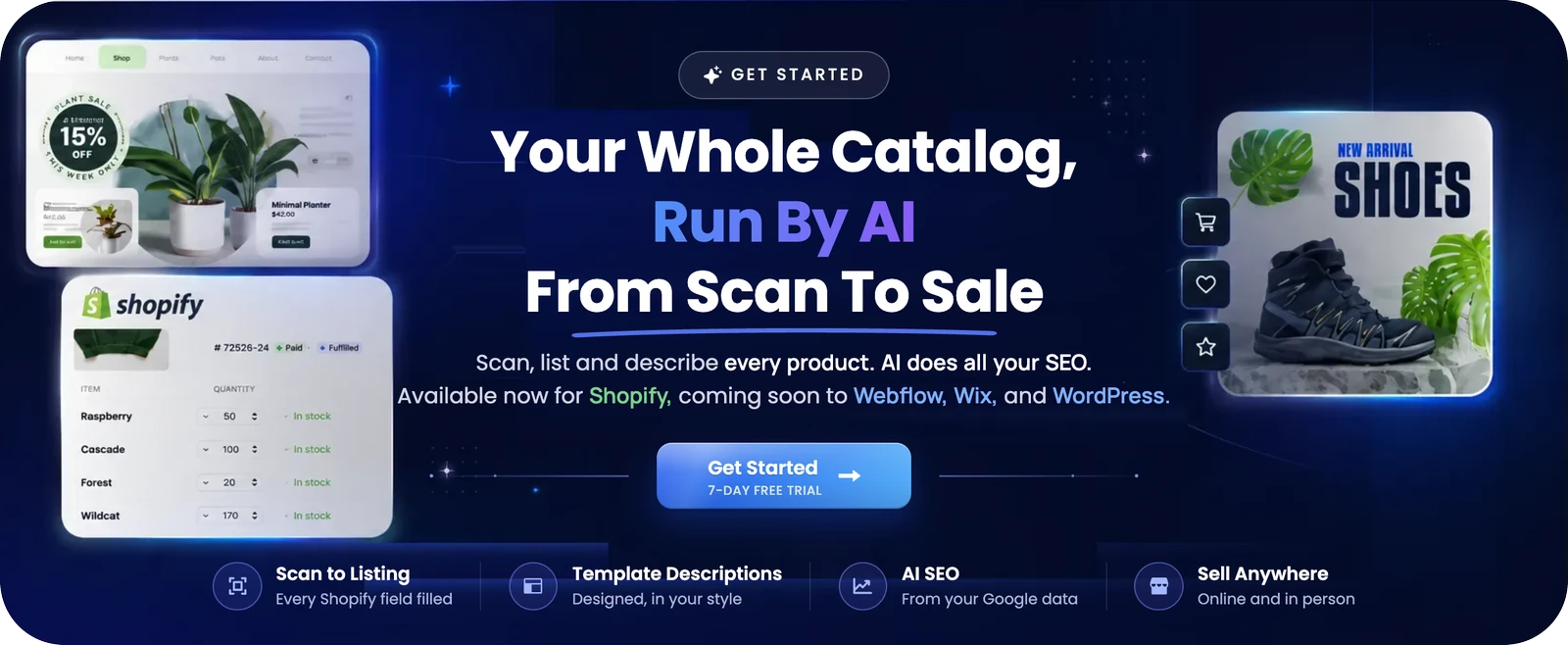
MerchUp is built on exactly this principle. The platform’s AI generates product descriptions for eCommerce sellers, and the features are real: bulk publishing, customisable templates, a visual editor, Shopify integration, and real-time catalogue management. But the benefit is what matters to the seller: consistent, high-converting listings published in a fraction of the time, without the manual grind of writing each one from scratch.
For any online seller who has spent hours rewriting product copy only to watch listings underperform, that benefit is the point. The features are the proof that it is possible.
If you want to see benefit-driven product descriptions in action, MerchUp’s AI tool lets you generate, edit, and publish optimised listings at scale. The pricing plans are structured by usage, so you only pay for what you actually need.


Comments
No comments yet — be the first to share what you think.