



The best eBay listing descriptions follow a short five-block structure: a hook, a spec table, benefit-first bullets, a trust block, and a mini-FAQ. Front-loading condition and the item’s main differentiator matters most, because the first 250 characters are all most mobile buyers see before deciding whether to tap “Read more”. Sellers who follow this format alongside honest condition disclosure see measurable conversion gains, and descriptions of 150 to 300 words usually hit the sweet spot between clarity and scannability.
TL;DR:
- Including clear details about item flaws and confirming the condition in the first 250 characters greatly improves buyer trust and reduces returns.
- Using the five-block structure—hook, spec table, benefit bullets, trust block, and FAQ—drastically increases listing conversions by matching natural scanning habits.
- Verifying all measurable facts and adding unique details manually prevents discrepancies and maintains listing accuracy, even when using AI drafts.
- Highlighting flaws with photos and placing the condition statement at the beginning of the description significantly boosts message and conversion rates.
- Filling in item specifics before writing the description maximizes search ranking, and keeping descriptions compliant with eBay policies prevents removal.
What to include in every eBay listing description
Buyers who reach your description are past the title and photos. They want the details that remove doubt, not a repeat of what they’ve already read.
Every description should answer three questions before anything else: what condition is this item really in, what exactly comes in the box, and will it work for what I need? Vague condition language is the fastest way to trigger a return or a “not as described” case. If there’s a scratch, a missing charger, or a repair history, say so plainly and reference the photo number where buyers can see it.
A practical checklist for every listing:
- State the precise condition, including any flaws, not just the eBay condition category label.
- List everything included: accessories, cables, manuals, original packaging, and any missing pieces.
- Give serial numbers, model numbers, or batch codes where they help buyers verify authenticity.
- Note exact dimensions and weight, especially for anything shipped in a box with size constraints.
- Add compatibility notes (voltage, software version, size conversions) where the item depends on them.
One rule sellers overlook constantly: fill in the structured item specifics fields first, then use the description to add context those fields can’t hold. eBay’s Cassini search engine weighs item specifics heavily for ranking, so a description that just repeats “Brand: Sony, Model: WH1000XM4” wastes space that should be explaining wear, testing, or what’s in the box.
The 5-block template: hook, spec table, bullets, trust, FAQ
This structure isn’t decoration. Seller testing across categories found that a structured, scannable format like this can lift conversion by a noticeable margin, largely because it matches how people actually read on a phone: skim, scan, decide.
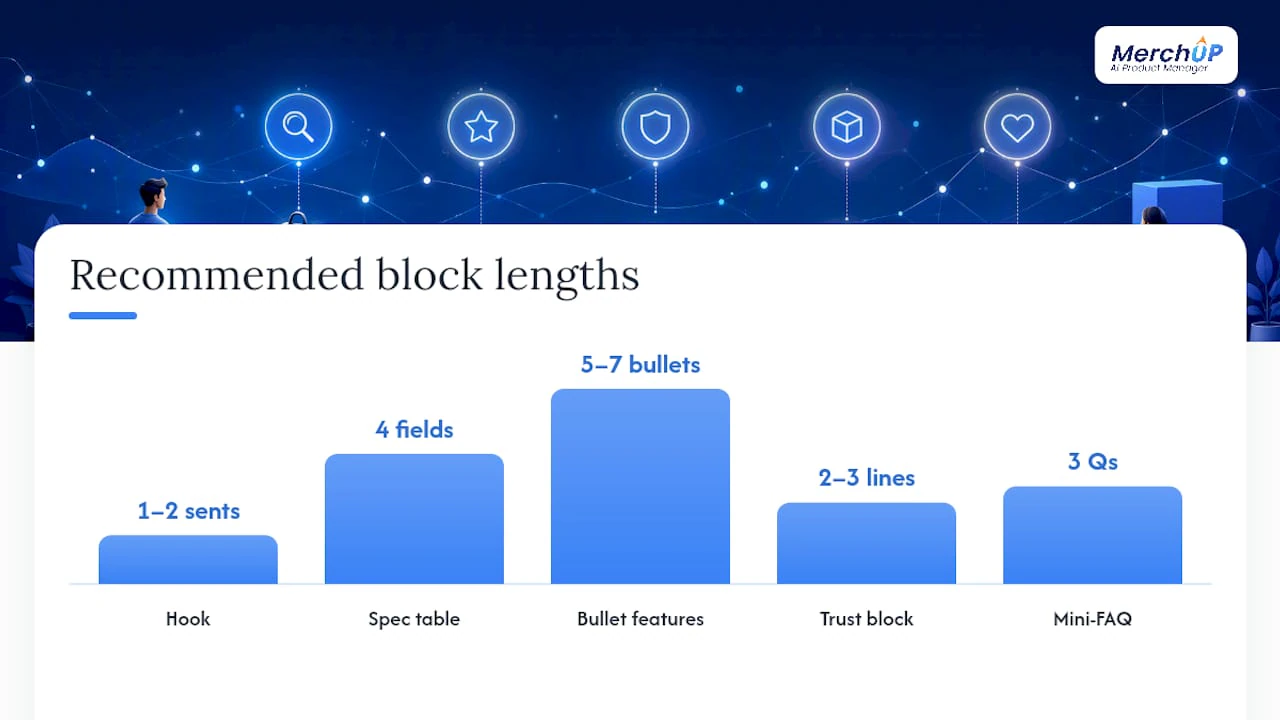
Block 1: The hook. One or two sentences naming who the item suits and its single best selling point. “A lightweight trail running shoe for wet UK conditions, tested for 40 miles before listing” beats “Nice shoes, good condition” every time.
Block 2: The spec table. A short table confirming the facts buyers scan for first.
| Field | What to include |
|---|---|
| Condition | Exact wear, functional issues, any repairs |
| Dimensions/Size | Measured, not assumed from the label |
| Included items | Everything in the box, listed individually |
| Model/Serial | Where relevant for verification |
Block 3: Bullet features. Five to seven bullets, each leading with a benefit, not a spec repeated from the table above.
Block 4: Trust block. Two or three lines covering shipping timescale, return window, and how condition and authenticity were checked.
Block 5: Mini-FAQ. Three short questions pulled from the sort of thing buyers actually message about. This alone tends to cut pre-sale messages noticeably, because you’ve already answered the question before it’s asked.
What does the eBay mobile preview actually show buyers?
Roughly 250 characters display above the fold on mobile before a buyer has to tap “Read more”. Whatever sits in that space needs to carry the item’s identity, its one differentiator, and its condition, because a large share of scrollers never tap through further.
eBay also restricts what you can build a description with. Active content, including JavaScript, Flash, and embedded forms, has been banned since 2017, and listings that still carry it risk removal. Basic HTML tags for headings, bold text, and simple layout are fine; anything requiring a script isn’t. Off-platform contact details and external links are against policy too, full stop, regardless of how harmless they seem.
Before publishing, run through this quick check:
- Preview the finished listing on an actual phone screen, not just the desktop editor.
- Confirm the first 250 characters name the item, its condition, and why it’s worth buying.
- Check that your condition description matches the item specifics condition field exactly.
- Look at your own photos and confirm every flaw mentioned in text is visible in an image.
Pro Tip: If you reference “see photo 4 for the scuff on the heel”, actually number that photo in the listing gallery caption, or the mismatch will generate more messages, not fewer.
Ready-to-use eBay description templates by category
These three templates follow the five-block structure. Copy one, swap in your own facts, and adjust the spec rows to fit the category.
- Apparel: Hook naming the size and fit (“Relaxed-fit denim jacket, true to size, women’s UK 12”). Spec table with measured chest, length, and sleeve, not the label size alone. Bullets covering fabric feel, wash instructions, and styling use. Trust block with return window. Mini-FAQ answering “does this run small?”
- Electronics: Hook stating function and tested condition. Spec table with model number, voltage, storage capacity, and battery health where checkable. Bullets on speed, compatibility, and what’s tested working. Trust block noting warranty status. Mini-FAQ covering charger inclusion and factory reset.
- Collectibles: Hook establishing rarity or provenance. Spec table with edition, year, and condition grade. Bullets on display condition and any documentation. Trust block on authenticity checks. Mini-FAQ on grading and shipping protection.
When adapting, always convert measurements to both metric and imperial where your buyers might expect either, and cite the specific photo number next to any flaw you describe.
Using AI safely to draft eBay descriptions
AI tools can build the structure and first draft of a description in seconds, but publishing that draft unedited is where sellers get into trouble. AI-generated drafts save time but still need a human pass to check measurements, serial numbers, and photo references against the actual item in hand. Skip that step and you risk a description that doesn’t match what’s in the box.
The other risk is sameness. If every listing in a category reads identically because the AI output went straight to publish, that duplicate copy can work against you rather than for you.
A workable routine:
- Generate the structural draft with AI, covering the hook, bullets, and FAQ shell.
- Manually verify every measurable fact against the physical item and photos.
- Add at least one detail unique to this specific unit, not the general product.
Tools like MerchUp handle the drafting and template side directly, with a visual editor for the manual pass and Shopify integration for sellers running listings across more than one storefront.
What actually moves buyer trust, based on years of watching listings underperform
Two habits separate listings that convert from listings that just sit there: photographing every flaw with a number the description points to, and putting the condition sentence in the first line, not buried in paragraph three. Sellers commonly see improvements in message rate, conversion rate, and return rate after making these changes.
— Jamie Moss
Write descriptions faster without losing the details that matter
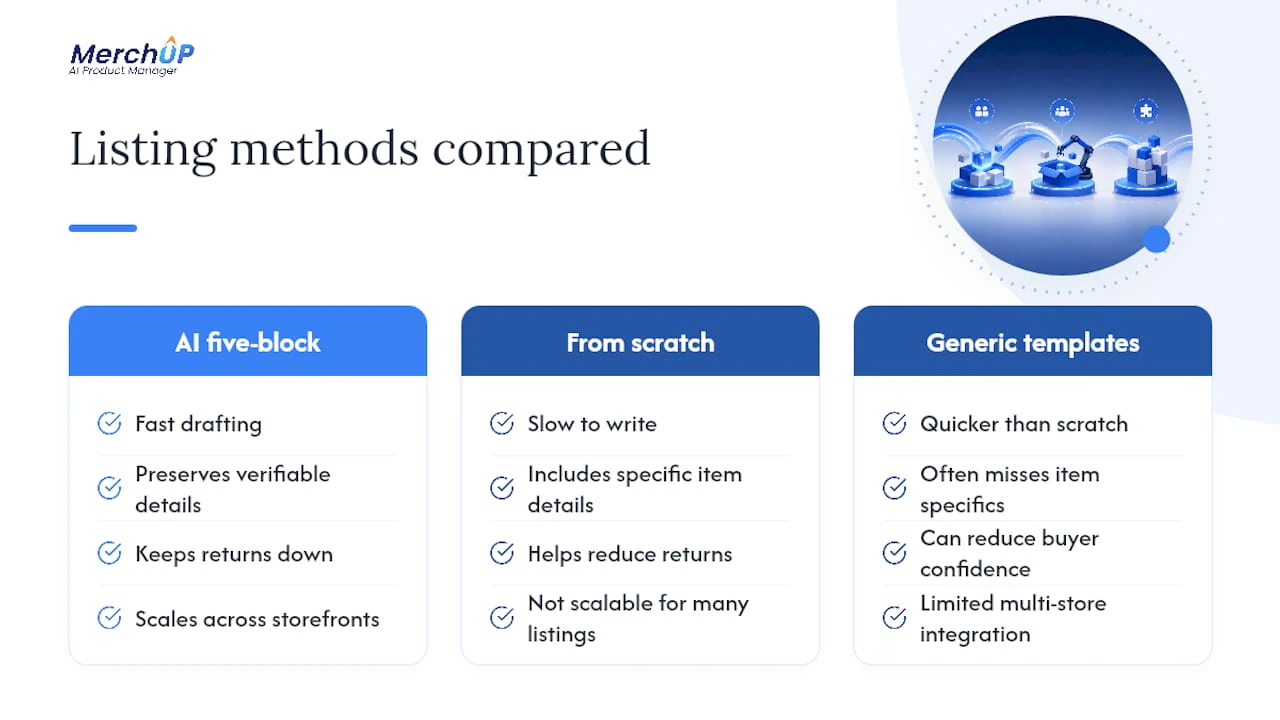
An AI-powered tool gets you a compliant, five-block description drafted quickly, then provides a visual editor to fix the details AI can’t know, such as your item’s actual scuffs, serials, and what’s really in the box. Compared with writing every listing from scratch or relying on generic templates, the advantage is speed without sacrificing the specific, verifiable detail that keeps returns down and buyers confident.

For eBay sellers managing more than a handful of listings, that speed compounds fast, especially when paired with integration for stock that lives across more than one storefront. Sellers researching keyword tools alongside description work might also find value in ecommerce SEO tooling as a complement, though titles and item specifics still carry more search weight than description text.
See the format in action in the MerchUp tutorial, or head to the MerchUp product page to start drafting your next batch of listings.
Where these best practices come from
The condition, mobile, and compliance guidance in this article draws on eBay Seller Center’s listing guidance, eBay’s item description policy, and specialist conversion research from SuperDS and ListingForge. Check current policy directly before publishing at scale, since eBay updates its rules periodically.
Sources
- Create great listings | Seller Center
- eBay Description Writing: Convert More Buyers in 2026 | SuperDS
- eBay Description Best Practices 2026: Mobile + Compliance | ListingForge


Comments
No comments yet — be the first to share what you think.