


The best approach to multichannel product descriptions is to build one master record per product, then generate channel-specific transforms from it using layered copy blocks. Write once at the source, adapt automatically for length and tone, and keep a human editor checking voice and accuracy before anything publishes. Skip any of those three pieces and consistency breaks down as your catalogue grows.
TL;DR:
- Building one master product record ensures consistent, accurate content that can be automatically transformed for each sales channel, reducing errors and duplication.
- A layered five-part structure, including headlines, core paragraphs, bullets, extended copy, and specs, helps tailor descriptions to different price points and shopper behaviors.
- Automating initial drafts with templates and setting up channel-specific rules streamline large-scale updates, but human review is essential before publishing live listings.
- Tracking metrics such as conversion rate, impressions, and completeness helps measure the effectiveness of optimized descriptions over time.
Why does multichannel content matter for SEO and sales?
Stores that swap manufacturer-supplied descriptions for original copy see higher conversion and dodge duplicate-content penalties that hit identical listings scattered across the web. That single fact should settle any debate about whether unique copy is worth the effort. It is, and the gap widens as more competitors paste the same manufacturer text onto their own product pages.
Marketplace algorithms have also got sharper. They increasingly flag generic AI-style phrasing, and copy that reads like every other AI-generated listing risks quiet demotion in search and category rankings. The fix isn’t avoiding AI. It’s editing AI drafts until they carry sensory detail and a recognisable voice, rather than shipping the first output.
Good multichannel content also has to work at two speeds. Consider these two reading behaviours:
- Scanners skim bullets in under five seconds looking for size, material, or compatibility.
- Committed readers want the paragraph that explains why the product matters, what problem it solves, and how it feels to use.
A layered structure serves both without forcing either to work harder than they should.
How do you build a master record and map it to each channel?
A master record is the single source of truth for every product fact, and it’s the foundation product information management platforms are built around. Get the fields right once, and every channel transform inherits accuracy instead of repeating your mistakes five times over.
Set it up in three stages:
- Define canonical fields. Lock in a benefit headline, a core paragraph, a bullet set, extended brand copy, and structured specs (dimensions, materials, compatibility).
- Write mapping rules per channel. Decide what Amazon truncates, what your Shopify PDP expands, and what a paid ad strips down to a single line.
- Set governance controls. Require certain fields before publish, flag banned words, and version every edit so you can roll back a bad AI draft.
Pro Tip: Treat your master record like a database, not a document. If a field can’t be reused programmatically across channels, it’s not structured well enough yet.
Retailers using this pattern report smoother channel mapping and transforms even across thousands of SKUs, because the mapping logic only needs to be built once per channel, not once per product.
What is the five-layer description structure?
Five layers cover nearly every product, from a £12 phone case to a £2,000 espresso machine:
- Headline: the single benefit that matters most, not a feature list.
- Core paragraph: two to four sentences that answer “why should I care?”
- Bullets: four to six scannable facts, ranked by what buyers ask about most.
- Extended copy: brand story, use cases, or styling advice for browsers who scroll further.
- Specs: dimensions, materials, compatibility, care instructions.
Length should track price and complexity. A £15 accessory needs a tight headline and three bullets; a £400 appliance earns a fuller core paragraph and a longer spec block, because buyers at that price research harder before committing. Mobile matters too: put the benefit in the first six words of your headline, because that’s often all a shopper sees before scrolling past.
Writing benefit-led headlines is where most teams fall into generic AI phrasing. “Premium quality construction” tells a reader nothing. “Grips wet trail rocks without slipping” tells them exactly why to buy. Sensory, specific language is also the simplest defence against the AI-detection risk mentioned earlier. Our structure guide walks through worked examples if you want to see the layers applied to real listings.
How do you adapt one description for different channels?
Your master copy doesn’t need five separate rewrites. It needs rules that decide what shrinks, what stays, and what gets dropped entirely per channel.
- Website PDP: use all five layers in full, since you control layout and character limits don’t apply.
- Marketplaces (Amazon, eBay): trim the headline to fit character caps, prioritise the top three bullets, and fold specs into a compliance-friendly table.
- Paid social ads: keep the headline and one sentence from the core paragraph, cut everything else.
- Email/newsletter: lead with the extended copy’s story angle, since email audiences already know the product exists.
To automate first drafts without losing quality, three template types cover most catalogues:
- A headline template with a benefit variable and a category variable.
- A bullet template ranked by the attributes buyers search for most.
- A specs template pulled directly from your master record, with no manual retyping.
Our copy-and-paste template guide has starting points for each of these if you’re building from scratch.
How do you manage the workflow at scale?
The pipeline runs in four stages: capture the master record, generate channel transforms, review for accuracy and voice, then publish and track. Automation earns its keep at stages one and two, drafting variants in minutes across a catalogue that would take a team day to write manually. Stage three is where a human has to stay involved, because templates plus automated rules still need staged approval to catch factual slips or off-brand tone before anything goes live.
- Assign one owner for master record accuracy, separate from whoever approves channel copy.
- Run quality checks for banned words, missing required fields, and character-limit breaches before publish.
- Version every change so a bad batch can be rolled back without re-writing from scratch.
Pro Tip: Never let AI publish directly to a live marketplace listing. Route every generated draft through one human checkpoint, even if that checkpoint takes thirty seconds per SKU.
Our bulk descriptions guide covers how teams structure this at catalogue scale, and a partner resource on AI at catalogue scale is worth a read if you’re mapping this against thousands of listings.
Where does Merchup AI fit into this process?
Merchup AI generates the first draft of your master record and channel transforms, then hands you a visual editor to fix voice and facts before anything publishes. Customisable templates keep headline, bullet, and spec formatting consistent across your whole catalogue, so you’re not rebuilding structure product by product.
The live Shopify integration means drafts sync straight into your store rather than sitting in a spreadsheet waiting for someone to copy and paste. Bulk publishing handles the volume problem directly: generate transforms for a hundred SKUs, review the flagged ones, publish the rest. Support for additional platforms is planned, extending the same workflow beyond Shopify stores.
How do you know it’s actually working?
Track four numbers: conversion rate, add-to-cart rate, organic impressions, and content completeness (the percentage of SKUs with every required field filled). Conversion and add-to-cart tell you if the copy persuades. Impressions tell you if it’s findable at all.

Run short A/B tests, two weeks per headline or bullet variant, and judge by conversion lift rather than click-through alone, since a headline that gets clicks but doesn’t convert is a net loss.
Three mistakes derail most rollouts:
- Publishing manufacturer copy verbatim across multiple listings, which triggers the duplicate-content problem covered earlier.
- Trusting a first AI draft without editing for sensory detail or brand voice.
- Ignoring channel character limits until a listing gets rejected or truncated mid-sentence.
What I’d actually do first
Pick a hundred SKUs, your best sellers or highest-margin items, and run a three-week pilot before touching the rest of your catalogue. Week one: build the master record and lock your field definitions. Week two: apply templates and generate transforms. Week three: measure conversion and add-to-cart lift against your baseline.
Jamie Moss has spent years watching eCommerce teams scale product content, and the pattern is consistent: the businesses that succeed treat AI drafting as a starting point, not a finish line. Start small, measure honestly, then expand once the numbers hold up.
— Jamie Moss
See the workflow in Merchup AI
Merchup AI is the fastest way to put the master record and layered structure covered above into practice without hiring a copywriting team or building templates from scratch.
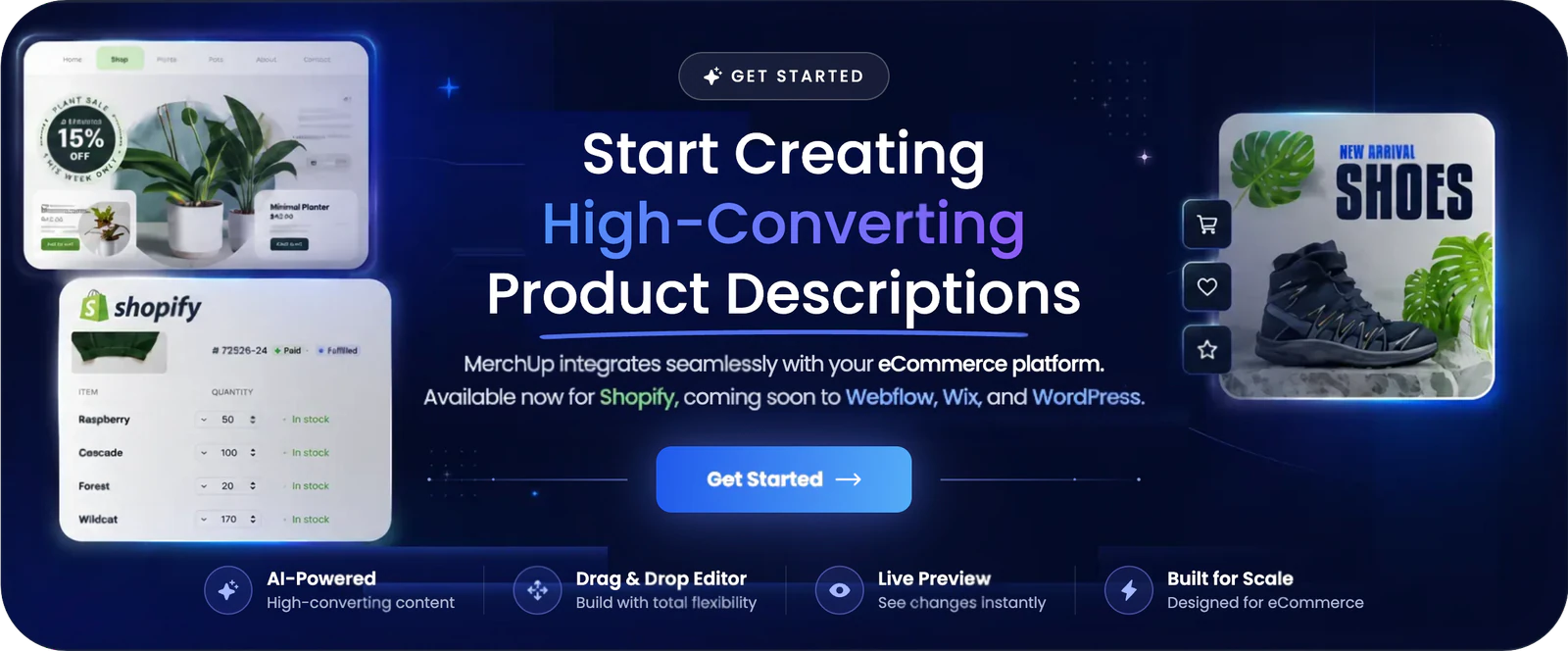
The 30-second tutorial shows exactly how a bulk draft run, template application, and Shopify sync work together, from raw product data to a published listing. If you want to test the method risk-free, pull a hundred SKUs from your best-sellers, run them through the platform, and compare conversion against your current listings after two weeks. Watch the tutorial first if you’d rather see the workflow before touching your own catalogue.
Sources
For deeper detail on the ideas covered here: ReWork’s product description guide explains the conversion and duplicate-content data in full. ChannelDock’s PIM overview covers master record architecture. Rob Palmer’s copywriting breakdown unpacks the five-layer structure. Shopify’s guide to descriptions that sell adds practical, mobile-first examples.
- Product description writing (ReWork resources)
- PIM · Listings & multi-channel product content | ChannelDock
- Product description copywriting (Rob Palmer)
- AI content detection: what marketers need to know (Hashmeta)
FAQ
What are the four C’s of omnichannel retail?
The four C’s commonly cited are consistency, convenience, choice, and communication, all aimed at giving customers the same experience regardless of where they shop.
Can you give examples of multichannel retailing?
A brand selling through its own Shopify store, Amazon, a physical shop, and Instagram checkout is multichannel retailing, each channel operating with its own rules but drawing from the same product catalogue.
What are examples of multichannel marketing?
Examples include running paid social ads, email campaigns, marketplace listings, and organic search content simultaneously, each adapted in length and tone from a single master version of the product story.
How long should a product description be?
Length should scale with price and complexity: a simple, low-cost item needs a tight headline and a few bullets, while a complex or expensive product earns a fuller core paragraph and extended specs.
Can Merchup AI manage descriptions across multiple sales channels?
Merchup AI currently publishes directly to Shopify with customisable templates and bulk generation, with plans to extend support to additional eCommerce platforms.


Comments
No comments yet — be the first to share what you think.