


A good electronics product description gives the buyer the exact model, the specifications that decide the purchase, what the specs mean in use, what is in the box and what the product will not do. It states every claim you can prove and nothing you cannot. This guide shows what to include, how to order it, how to meet US advertising and accessibility expectations, and how to do it across a catalogue without writing every page by hand.
TL;DR
- Lead with brand, product name and model number, then a short feature summary, then complete specifications.
- Pair every spec with what it means for the buyer, and only claim what your evidence supports.
- State compatibility, included accessories and limits (for example, “charger sold separately”) so buyers do not return the product.
- Keep to Google’s listing rules: factual, no promotional text, no block capitals, roughly 500 to 1,000 characters.
- Check US rules (truthful claims, “Made in USA”, accessibility) before publishing, and review AI-written copy before it goes live.
What an electronics description must contain
Electronics buyers compare. They have two or three tabs open, and they are looking for the one fact that rules a product in or out: does it fit my device, how long does the battery last, is the cable included. A description that answers those questions quickly wins the sale and avoids the return.
Amazon’s category style guide gives a useful checklist. It says to include the brand, product name and model number, a concise feature summary, understandable benefits, applications, compatibility, dimensions, colour and other variant details, included accessories, relevant standards, and any dependencies or limitations, such as required products sold separately. The same guide favours an informative, authoritative tone over marketing-speak. That tone suits electronics: shoppers distrust adjectives and trust numbers.
In practice, build every description from these blocks:
- Identity: brand, product name, model number, and any identifier such as a GTIN or MPN. Use the manufacturer’s exact spelling.
- Summary: two or three sentences on what the product is, who it suits and the main reason to buy it.
- Key features: four to eight bullets, each one fact plus its meaning.
- Compatibility: devices, operating systems, ports, standards and versions it works with, and those it does not.
- Specifications: a complete, consistently formatted list or table.
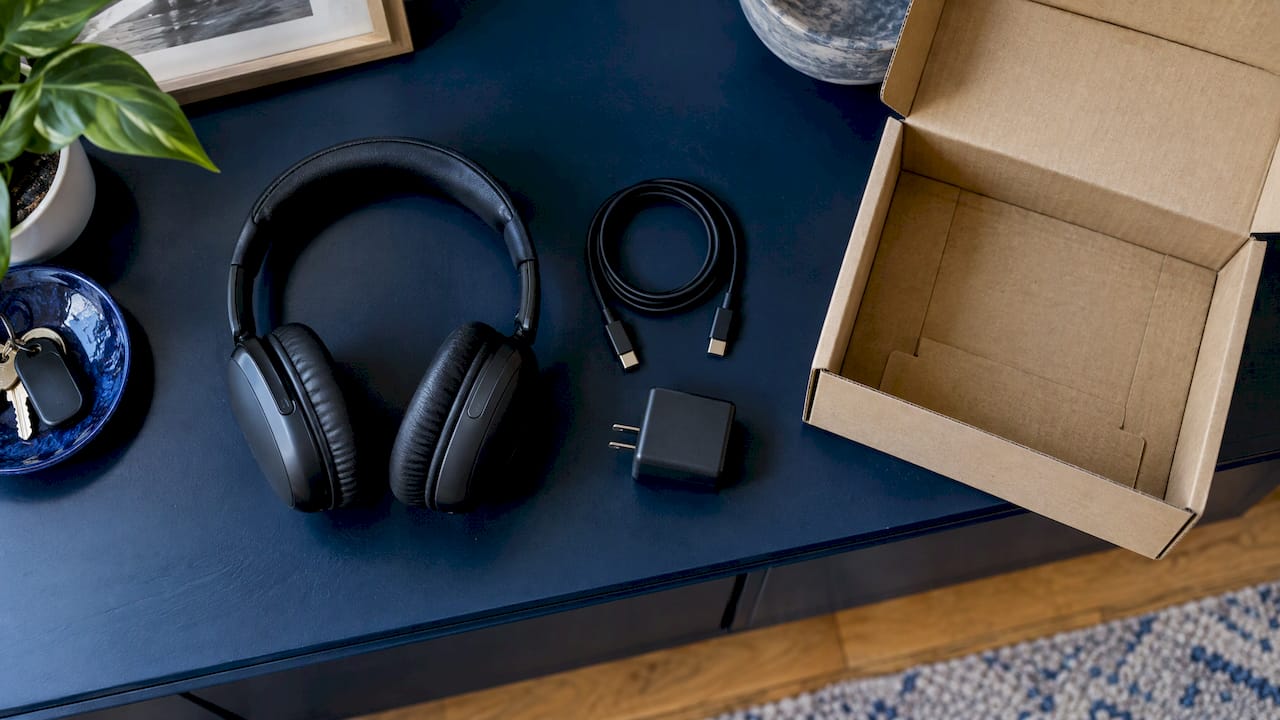
- In the box: every included item, and what must be bought separately.
- Warnings and instructions: safe-use notes, charging guidance, certifications you can document.
Adapt the details to the category
A smartwatch and a record player share almost no buying criteria. Zalando’s partner guide lists electronics such as cameras, charging cables, headphones and in-ears, power banks, record players, speakers and smartwatches, and says the right details depend on the product: power source, features, technical specifications, extras, measurements, weight and cable length, plus connection type, battery life, waterproof class, materials, warnings and instructions where relevant.
A working shortlist by category:
| Category | Details buyers look for first |
|---|---|
| Headphones and earbuds | Wired or wireless, Bluetooth version, battery life, noise cancelling, water resistance rating, weight, included tips and cable |
| Chargers and cables | Connector types, cable length, power output, supported devices, certifications, number of ports |
| Power banks | Capacity, output per port, input charging time, ports, weight, airline-related notes you can source |
| Speakers | Power source, connection, battery life, water resistance, dimensions, weight, smart-assistant support |
| Cameras | Sensor type, lens or mount, video modes, storage format, battery type, included accessories |
| Smartwatches | Phone compatibility, battery life, display size, water resistance, sensors, strap sizes |
| Audio equipment (record players) | Speeds, cartridge, outputs, built-in preamp or not, power source, dimensions |
Every row hides a compatibility trap. A cable with the right connector but the wrong power rating will disappoint a buyer, and a product that needs a separate adapter must say so in the first screen of text.
Turn specifications into benefits without overclaiming
A spec sheet says “5,000 mAh”. A buyer wants to know whether the phone will last a weekend. The skill is translating one into the other without promising more than you tested.
A reliable pattern is benefit, specification, proof. Say the practical outcome, name the spec that supports it, and state the conditions. For example:
Listen through a full work day. The 40-hour battery rating is measured at moderate volume with noise cancelling off; with it on, expect a shorter runtime.
Notice what the example does. It keeps the verified fact (40 hours), adds the condition, and states the boundary. If you only have the number and no test conditions, keep it as a plain specification: “Battery life: up to 40 hours (manufacturer rating)”. Use benefit language only when your evidence covers that exact scope.
Some habits to build into your style guide:
- Keep the number, drop the slogan. “Blazing fast” tells nobody anything. “Charges from 0 to 50% in 30 minutes with a compatible 30 W charger” does, if the manufacturer states it.
- Name the conditions. Battery life, water resistance and range are always measured under conditions. Include them.
- Explain jargon once. If you must say “IPX4” or “Bluetooth 5.3”, add a short plain meaning: splash resistant, a newer wireless standard.
- Say what it is not for. A budget action camera is not a replacement for a mirrorless body. Honest scope reduces returns and supports trust.
- Take specs from the manufacturer. Copy figures from the official datasheet or product page, not from another retailer, which may have copied an error.
US rules to check before you publish
This is general guidance, not legal advice. If a claim is high-stakes (safety, health, environmental), have a qualified adviser review it.
Substantiate every claim
The Federal Trade Commission’s position is that express and implied claims must be truthful, non-misleading and reasonably substantiated, and that wording is judged on both its express and implied meaning. A technically true spec can still mislead if the surrounding presentation implies a result you cannot support. The same statement says testimonials must reflect typical experience or clearly disclose what typical experience is. So avoid pairing a laboratory battery figure with a headline that promises “all week” use.
Be careful with “Made in USA”
The FTC says an unqualified “Made in USA” claim requires final assembly or processing in the United States, all significant processing there, and all or virtually all components made and sourced domestically. Most consumer electronics contain imported components, so for most products the safe choice is to leave the claim out unless your supplier documents it.
Write descriptions and alt text people can use
ADA.gov guidance recommends short, descriptive alt text, accurate captions on video, sufficient colour contrast, usable headings and keyboard access, and stresses that automated checkers are useful but not enough: manual review is needed. A Department of Justice settlement with an online grocer lists the barriers that made shopping sites hard to use, including missing or inaccurate alternative text, unlabeled controls and missing table headers. For electronics pages, that means giving spec tables proper header rows and describing each product photo in a sentence. Our guide to Shopify alt text walks through a formula and the admin steps.
Write for shoppers and for search
Electronics queries are specific. People search model numbers, port types and compatibility, so the details that help a buyer are the same ones that help search engines match your page.
Shopify’s guide to writing product descriptions advises using the primary keyword naturally in the title, opening paragraph and a subheading, adding long-tail keywords and writing a unique description for each product. Our walkthrough of product page keyword placement shows what that looks like in each position, and the product description SEO guide covers the wider picture.
Titles
Google Merchant Center says titles should identify the item and may include differentiating characteristics such as brand or colour, without promotional text or block capitals (see its product data specification). A solid electronics title pattern is: Brand + product line + model + the one attribute that separates variants. For example: “Acme SoundPro 3 Wireless Over-Ear Headphones, Black”.
Descriptions for Shopping listings
The same Merchant Center specification recommends roughly 500 to 1,000 characters for descriptions, permits up to 5,000, and asks for relevant attributes, standard grammar and a final punctuation mark. Google’s Manufacturer Center guidance adds that descriptions should list features, technical specifications and visual attributes, describe only the product, and avoid promotional text, gimmicky capitalisation, comparisons and business history. Its logic is that specific attributes help systems and customers identify the right item.
Marketplaces add their own rules. Newegg’s seller policy, for instance, prohibits price, shipping, warranty, URLs, cross-selling, competitor mentions and excessive filler in descriptions. If you sell on several channels, keep one clean, factual master description and add channel-specific extras separately.
Meta descriptions
The meta description does not appear on the product page but decides whether the search result gets clicked. Lead with the product and the one decisive spec, and finish with a reason to click. Our product meta description guide has formulas for it.
Disclosing AI-written text
If you generate copy with AI and use Google Shopping feeds, note that Google’s April 2024 Merchant Center update introduced structured title and structured description attributes for disclosing text created with generative AI. Check the current specification before you set up your feed.
A template you can reuse
Here is a structure for most electronics products. It follows the order buyers scan in: what it is, why it matters, whether it fits, what it contains.
Title: Brand + Model + Product type + key variant
Opening (2 to 3 sentences): What the product is, who it is for, and the main benefit, tied to one spec.
Key features (4 to 8 bullets): Each bullet states a fact and what it means. “USB-C port: charges from the same cable as most current laptops and phones.”
Compatibility: “Works with iOS 16 and later and Android 10 and later. Not compatible with …”
Specifications: A table with the same rows in the same order across all products in the category.
In the box: A list. Include what is not included.
Care and safety: Charging, storage and warning notes taken from the manufacturer’s manual.
For more on ordering, see our guide to product description structure and the product description examples we have broken down.
Write and check descriptions at scale
A store adding new electronics every week cannot hand-write every page, and copying manufacturer text onto every page creates duplicates that compete with each other. Our guides on unique product descriptions at scale and fixing duplicate content on product pages cover that problem.
A workable process, drawn from marketplace guidance on product sheets: gather the brand, model, identifiers, technical specifications and images, use official manufacturer information, structure the page as an introduction, feature list and complete specifications, then check the title, product IDs, description, images, attributes and logistics before submission.
Turn that into a routine:
- Collect source data. Datasheet, manual, box photos, model and barcode.
- Draft with a fixed template. Same sections, same spec order.
- Verify the numbers. Compare each figure to the official manufacturer page.
- Review claims. Remove any adjective you cannot substantiate.
- Add images with alt text. One sentence on what the photo shows.
- Publish and monitor. Check which pages earn impressions and clicks, and refine titles and meta descriptions.
The review in step 4 is the one teams skip, and it is where AI-written copy needs a human. Our 30/60/90 playbook for AI product page optimisation sets out how to introduce it without losing control of quality, and our guide to keeping helpful product pages visible explains why copy, schema and on-page facts should agree.
Our perspective
Electronics is the category where a vague description costs the most. A buyer who cannot tell whether a charger fits, or what is in the box, simply leaves. So we treat a product description as the output of a whole product workflow, not a paragraph of copy.
That is why MerchUp AI is built as an AI product manager for Shopify, not only a description writer. You start from a product photo or barcode, and it builds a full listing: title, type, vendor, price, tags and SEO. It writes the description into a designed template, so every product in your catalogue has the same order of information, and it can create AI product photos to go with it.
We also believe nothing should go live unreviewed. Every change in MerchUp AI is reviewed before it is published, with full history and restore, so a wrong spec is caught by a person and can be rolled back. For SEO, the AI reads your own Google Search Console data and live Google results, picks keywords, writes meta titles, descriptions and image alt text, checks rankings and pushes everything to your store, with no SEO knowledge needed.
Our view: accuracy and speed are not a trade-off if the process is built around review.
Jamie Moss
Build your electronics listings with MerchUp AI
If you add electronics to a Shopify store every week, MerchUp AI turns a photo or barcode into a complete listing, writes the description into a template you design, and handles keywords, meta titles and image alt text in one click. There is a free plan, and paid plans start with Starter at £12.99 a month. Growth is £34.99, Pro is £79.99 and Scale is £199.99 a month. See the plans and pricing.
To see how the pieces fit, look at how the AI tools work together, try the 30-second description tutorial, or see the AI product photos tool. MerchUp AI is available now for Shopify.
FAQ
How long should an electronics product description be?
Google Merchant Center recommends roughly 500 to 1,000 characters for descriptions and allows up to 5,000. Use the short end for simple accessories and more room for complex products, where a full specification table can sit below the summary. Never pad: every sentence should carry a fact.
Should I copy the manufacturer’s description?
Use the manufacturer’s facts, but write your own text around them. Identical copy appears on every retailer’s page, which makes it hard for yours to stand out, and it may contain claims you have not checked. Take specifications from the official source, then rewrite the summary and benefits in your own words.
Can I say a product is the best or the fastest?
Only if you can substantiate it. The FTC expects both express and implied claims to be truthful and supported, and Google’s guidance asks for descriptions without promotional text or comparisons. State the measured figure and its conditions instead, and let the buyer draw the conclusion.
What should I include for compatibility?
Name the devices, operating system versions, ports, connector types and standards the product works with, and name known exceptions. Add what must be bought separately, such as an adapter or a power brick. Put this near the top, because compatibility is the most common reason an electronics buyer abandons a page.
Do I need alt text on electronics product photos?
Yes. ADA.gov guidance recommends short, descriptive alt text, and a missing or wrong description is one of the barriers listed in a DOJ online shopping settlement. Describe what the image shows, such as the product, its colour and the angle, without stuffing keywords.
Sources
- Amazon category style guide
- Zalando Partner electronics image guide
- FTC public statement on substantiation, 2016
- FTC letter on “Made in USA” claims, 2025
- ADA.gov web accessibility guidance
- US DOJ settlement agreement on online shopping accessibility
- Shopify guide to writing product descriptions
- Google Merchant Center product data specification
- Google Manufacturer Center description guidance
- Google Merchant Center 2024 specification update
- Newegg product description policy
- Marketplace guide to creating a product sheet


Comments
No comments yet — be the first to share what you think.